
AI Trading Signals: Navigating the 2026 Market Evolution
Explore how AI trading signals are transforming market analysis and decision-making for traders in crypto, forex, and stocks as of late 2026.
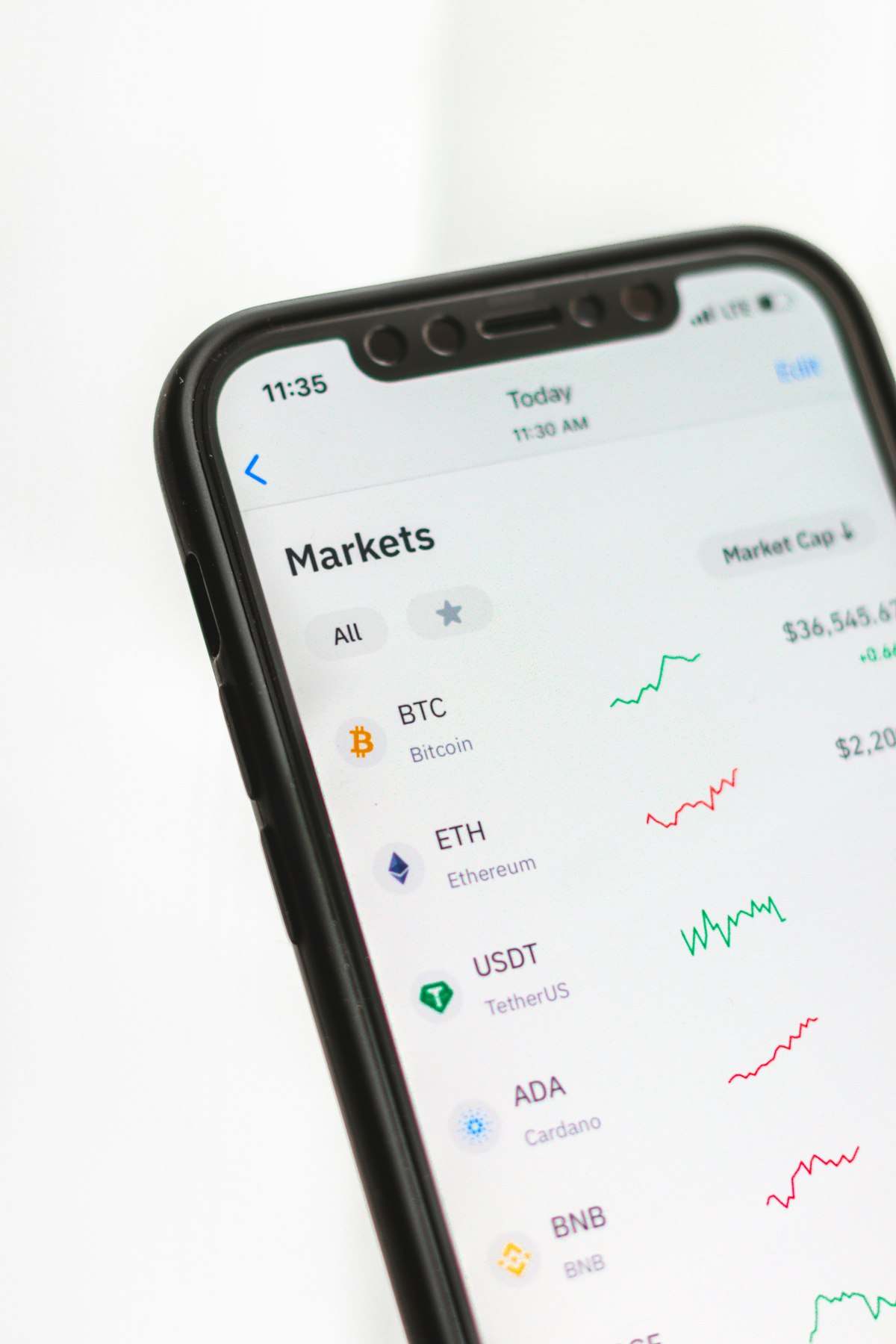
Key takeaway AI trading signals, now significantly more sophisticated in late 2026, offer traders advanced market insights by processing vast datasets to identify patterns and predict movements, thereby enhancing decision-making across crypto, forex, and stock markets through predictive analytics and risk assessment capabilities.
What are AI Trading Signals in 2026?
In 2026, AI trading signals have evolved beyond simple pattern recognition, leveraging sophisticated machine learning models, deep learning networks, and even elements of quantum-inspired algorithms to interpret real-time market data. These signals are essentially actionable insights or alerts generated by artificial intelligence systems that analyze a multitude of factors, including price action, trading volumes, fundamental data, economic indicators, social media sentiment, news headlines, and even satellite imagery or supply chain data for commodities. Unlike traditional indicators, AI models can adapt and learn from new data, continuously refining their predictive accuracy and identifying emergent trends that human analysts or simpler algorithms might miss.
For traders on platforms like Finance Tradex, this means receiving highly contextualized recommendations for potential entry and exit points, optimal stop-loss levels, and even suggested position sizing. The complexity of these systems allows them to operate across diverse asset classes – from the volatile crypto markets, which AI can monitor for whale activity and network congestion, to the high-liquidity forex pairs where macro events are instantly factored in, and the equity markets where corporate earnings, innovation cycles, and regulatory shifts are weighted. The focus has shifted from mere signal generation to intelligent, adaptive decision support.
How has AI Signal Technology Evolved by Late 2026?
The advancements in AI trading signal technology by late 2026 are profound. We've moved from rule-based expert systems to dynamic, self-improving algorithms. Key developments include: enhanced predictive analytics capabilities, where models can forecast not just direction but also potential magnitude and probability of price moves; the integration of natural language processing (NLP) to decipher nuances in global news and social sentiment with greater accuracy; and the use of federated learning where multiple AI models can share insights without compromising proprietary data. Edge computing also plays a role, enabling faster processing of data closer to its source, critical for high-frequency trading applications.
Furthermore, explainable AI (XAI) is gaining traction, addressing the 'black box' problem by offering some level of transparency into *why* a particular signal was generated. While not always fully auditable, XAI provides insights that help traders build trust and understand the underlying logic. The advent of synthetic data generation has also allowed AI models to be trained on more diverse scenarios, including 'black swan' events, making them potentially more resilient to unforeseen market shocks. This evolution empowers traders with tools that are not only faster but also smarter and more robust than ever before.
What are the Benefits of Using AI Trading Signals?
The primary benefits of integrating AI trading signals into a trading strategy are multifold. Firstly, they offer an unparalleled capacity for data analysis, sifting through terabytes of information in milliseconds – a feat impossible for human traders. This leads to the identification of obscure patterns and correlations that can unlock significant trading opportunities. Secondly, AI signals introduce a layer of objectivity, reducing emotional biases (like fear and greed) that often plague human decision-making and lead to costly mistakes. Traders using AI signals can stick to a disciplined approach, even during volatile market conditions.
Thirdly, AI allows for rapid backtesting and optimization of strategies. Traders can quickly evaluate how a signal-based strategy would have performed historically across various market conditions, tweaking parameters for improved future performance. Fourthly, they enable constant market surveillance across multiple assets and timeframes, providing traders with 24/7 coverage. This is particularly valuable in crypto and forex markets that operate around the clock. Lastly, AI signals can significantly enhance risk management by providing insights into potential drawdowns, optimal position sizing, and dynamic stop-loss adjustments, helping to protect capital more effectively. Historically, traders using advanced analytics have often demonstrated an edge in rapidly changing environments.
What are the Limitations and Risks of Relying on AI Signals?
Despite their sophistication, AI trading signals are not infallible and come with their own set of limitations and risks. One significant concern is the 'black box' nature of many advanced AI models; without XAI, understanding *why* a signal was generated can be difficult, leading to a lack of trust or an inability to correct flaws. There's also the risk of 'overfitting,' where a model performs exceptionally well on historical data but fails to generalize to new, unforeseen market conditions. This is particularly true for models trained on limited or biased datasets.
Another limitation is the dependency on data quality. 'Garbage in, garbage out' holds true; if the input data is flawed, incomplete, or manipulated, the AI's output will be equally unreliable. Market dynamics can change rapidly, and while AI models learn, they may not always adapt instantaneously to paradigm shifts, leading to outdated signals. There's also the potential for 'flash crashes' or cascading effects if many algorithms react to the same signal simultaneously, creating self-reinforcing market movements. Furthermore, subscription costs for high-quality, real-time AI signals can be substantial, and false signals, while less frequent with advanced AI, can still lead to financial losses if not critically evaluated by the trader. Therefore, while powerful, AI signals should be viewed as a sophisticated tool within a broader trading strategy, not a guaranteed pathway to profits.
How Can Traders Effectively Integrate AI Signals into Their Strategy?
To effectively integrate AI trading signals, traders should adopt a methodical approach. First, understand the source and methodology of the AI signals. Not all AI is created equal; differentiate between basic algorithmic alerts and advanced machine learning models. Second, use signals as a confirmation tool rather than the sole decision-maker. Combine AI-generated insights with your own technical and fundamental analysis. For instance, if an AI signal indicates a buy opportunity, cross-reference it with key support levels, candlestick patterns, or relevant news events.
Third, start small and test rigorously. Implement a demo account or use small position sizes to evaluate the performance of AI signals in real-time market conditions before committing significant capital. Continuously monitor their accuracy and adapt your strategy as needed. Fourth, understand the asset class specificity; an AI model trained for forex may not perform optimally in crypto without significant re-tuning. Finally, maintain continuous learning. Stay updated on the latest AI advancements and market trends, and be prepared to adjust your signal providers or integration methods. A balanced approach, combining cutting-edge technology with prudent human oversight, often yields the best results.
*Trading involves significant risk and is not suitable for all investors. You may lose all of your invested capital.*
Frequently asked questions
What's the main difference between traditional and AI trading signals in 2026?
The key difference lies in adaptability and complexity. Traditional signals are often rule-based and static, while 2026 AI signals use machine learning to continuously learn from vast, diverse datasets, including sentiment and macro-economic factors. They offer predictive capabilities that adapt to evolving market dynamics, going beyond simple pattern recognition to provide more nuanced and contextual insights.
Can AI trading signals predict market tops and bottoms accurately?
While advanced AI models can identify high-probability turning points by analyzing intricate patterns and indicators, accurately predicting exact market tops or bottoms with certainty remains elusive. AI signals can significantly improve the *likelihood* of identifying these points by processing extensive data and spotting subtle shifts, but they should be used as an informed probability assessment rather than a definitive forecast. No system guarantees perfect predictions.
Are AI trading signals suitable for all asset classes?
AI trading signals can be applied to various asset classes, including crypto, forex, and stocks. However, the effectiveness often depends on the specific AI model's training and optimization for that particular market. A model tuned for forex volatility might not perform well in the less liquid stock market without adjustments. Traders should ensure the AI signals they use are specifically designed and proven for their chosen asset class.
How does AI account for 'black swan' events in trading signals?
By 2026, some advanced AI models incorporate techniques like stress testing, scenario analysis, and even training with synthetic data generated from various extreme market conditions, including simulated 'black swan' events. This helps them develop robustness and potentially identify early indicators of extreme shifts. However, the unpredictable nature of true black swan events means AI can mitigate, but not entirely eliminate, their impact or predict their precise occurrence.
Do I need programming skills to use AI trading signals?
Generally, no. Most AI trading signals are delivered through user-friendly platforms, dashboards, or alerts from providers like Finance Tradex. While understanding the underlying concepts is beneficial, direct programming skills are usually not required to interpret or act upon the signals. However, advanced traders looking to customize or build their own AI models would benefit from programming knowledge in languages like Python.
Ready to put this into practice?
Open a free Finance Tradex account and start trading with AI signals.
Get started

